


As a math coach, people always want to catch my ear about the use of a calculator. I ought to put my voice into the argument since … well, that’s what I do here. The two sides to the argument go as follows:
1) Students should use calculators because the machine can already do it for them.
2) Students shouldn’t use the calculators because computers (big and small) make kids stupider.
I’m not about to advocate for the middle, either. As a computer scientist and middle school math teacher, I’ve tended to lean towards argument #2. Too many students depend on the TI 30X for the simplest calculations. A few of them just prefer the device over carrying a few digits here and there. They’re still looking at the back of their marble notebooks for the 12 x 12 multiplication matrix. The reason so many of them struggle with division is because they can’t figure out how many times the divisor goes into the dividend, or why, when expressing a remainder, I also express that remainder as a fraction with that remainder over the dividend. These are all pieces of multiplication and kids struggle mightily with just that piece.
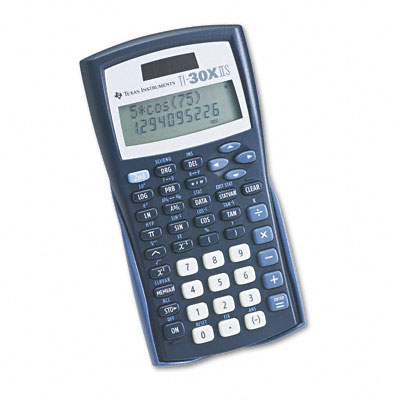
Then, once armed with a calculator, those of us in the number 2 category believe that students won’t make meaning of the numbers on their LED screens once calculated. (By some of the research I did, it seems we’re mistaken.)
Having said that, as the tech tide slowly rides over those of us in category #2, we should find a progressive solution that satisfied both of us. This new tech wave will make the calculation of basic operations (and even harder ones) almost unimportant in the future classrooms. Why not let them use calculators when asking high level questions? Why not ask more high level questions? Why not ask for context when the kids derive a numerical answer from their calculators, which is much more instructionally appropriate in math than just drilling a bunch of numbers into them?
We do have to be more thoughtful about K-12 education, and that starts from … pre-K and early ed. Pardon the anecdote (because anecdotal evidence should only be used sparsely), but one of the only reasons counting even mattered to me was because I could follow The Count on Sesame Street. The Count made counting relevant to enumerating things. Calculators can make it easier for students to get directly to the actual math within a situation, and grasp at concepts without having to worry about a little mathematical calculation.
But the next waiter who messes up my change will make me recant everything I just said. I’m just saying.
Mr. Vilson, who is actually a math teacher, believe it or not …
This year I did it right. In both my preps, all five classes, I’m coming in, letting them know it’s ok to take them out for annoying calculation – this is after thoroughly deemphasizing them for 1/6 of the year. Kids will take them out, use them, but I’ve set the emphasis on working without them, valuing hand-calc, etc.
In calc (and I’ll blog this, promise) my semi-invert has them watching non-calc videos. When I made them take out the TIs last week, some had not seen action in a month.
I will admit that I’m overly dependent upon my calculator and I want to stress the importance of having a strong handle on the basics of math and calculating down before turning to a calculator to my kids. That was one of the reasons why I was so adamant about writing out my stats questions by hand for the first semester before finally succumbing to the ease of using Excel. At least I knew I could do it either way. Plus, it helps me to really learn when I write things down by hand.
Though I am the kind of person who still gets math wrong even when using a calculator…so yeah.
But interesting that you broached this subject since I just read an article in the NYT about the Waldorf schools and was going to ask you what your opinion on limiting technology in the classrooms. If you haven’t done so already, that is.
Here’s the article: http://nyti.ms/nupJkY
When I was a kid, we weren’t allowed to use any form of calculators at school. I was able to multiply and divide with ease. And, since I was used to it, I’d calculate fast and with precision.
Then I started using a calculator. As you can guess, now that I am using a PC, all calculations are done on it. Let me tell you that I can’t add two numbers without making a mistake. And I used to be pretty good at it. As opposed to me, my guy is still making them without a calculator’s aid. As you can guess, he’s still doing it well.
I would not allow calculators in the school, for the simple fact it tends to make you forget some basics. Ask me to calculate 6×9 and I might have few seconds when I try to recall it’s 54. When I was 12, I’d tell you the result in a fraction of a second.
Calculators do make it easier, but we forget easier too. I’d rather have my kid ‘waste’ 2 minutes with a calculation, than have him reach 30’s and be in a predicament if he had to calculate something and didn’t have a calculator
Jose,
A very thoughtful view of the calculator issue. I teach 8th grade math. I find that whether or not calculators are used number sense is really the issue. Can you make sense of the answer you get by manual calculation or by using a calculator? Many times students say, but that is what my calculator says is the answer! I usually mention garbage in is garbage out and then discuss with the student(s) what their answer really means in the context of the problem. I do not know the answer to this dilemma but try to give my students numerous opportunities to write and discuss their thinking and reasoning.
I enjoy reading your viewpoints. Such food for thought!
Innumeracy will kill democracy long before apathy will.
Context is everything.
Zeroes matter for reasons many of the calculator-dependent junkies do not realize..
And yes, I’m a crank, but even stopped clocks are right twice a day
I’ll be blunt: Math teachers are crazy about this topic. Calculators reflect nothing other than an advancement in technology that didn’t exist when they learned math, and “what was good for me is good for all my students” is in essence, the attitude. Similarly, practice until you know.
That is both garbage psychology of learning, and idiocy about the use of embracing modern technologies of the human race. No child will be harmed by using modern tools. Can the opposite be said about kids who don’t learn to tools that shape modern/future society?
Finally, if it is mathematics that are to be taught, then there are two distinct deal breakers on how that means calculators ought to be used. The habits of a mathematician involve reasonableness of answers. If that is part of your classroom culture, the “incorrect” use of calculators is a natural part of learning. Similar to how we observe children overgeneralizing new knowledge… Second, many mathematicians do not consider shop-keeper arithmetic, or any other easily programmable algorithmic knowledge, to be mathematical. In fact, many so rarely do the “mathematics” that have become so routinized that they struggle to compute with the expected speed one would think when asked to do so.
I have a graduate degree in mathematics and pause frequently to recall arithmetic facts, I don’t know the quotient rule, nor L’Hopitals something or other in Calculus.
If I may follow with one last thought, there is such a great deal of innapropriate use of technology in schools, it is clear why the calculator debate lingers in mathematics education, 40 years+ later… Any teacher who teaches the tool is mistaken. As is any teacher who believes the tool will teach the children.